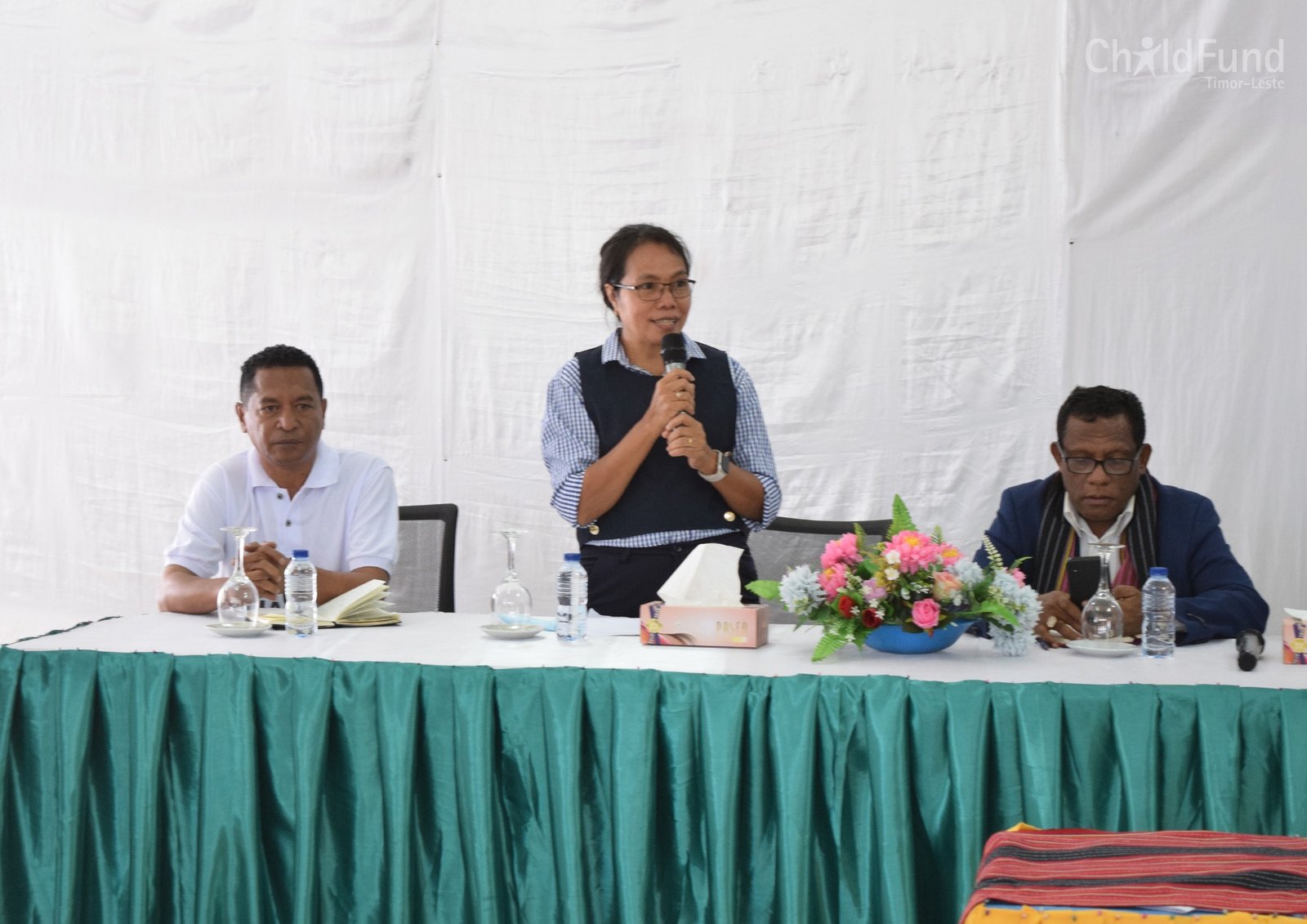
On July 30 2025, NGO Belun officially launched a new research report under the Strengthening Social Cohesion project – funded by the EU, focusing on “Strengthening Advocacy to Enhance Women’s Participation in the Tara Bandu Process.” In Liquica Administrative Post.
The report reaffirms that Tara Bandu remains a highly respected and effective traditional conflict resolution mechanism within communities, with community conflict dropped from 50% to 3% in some villages. However, it also highlights ongoing gaps in the participation of women and youth, especially in decision-making roles. Although women frequently attend Tara Bandu events, their involvement rarely extends to influencing the rules and decisions that impact them. This limited role is often rooted in cultural taboos.
The research also shows that when women are excluded from decision-making, the resulting policies often overlook the needs of women and children, who are central to community well-being. Promoting gender equity in traditional practices like Tara Bandu is crucial for inclusive, sustainable development. Increasing women’s participation is key to achieving equitable governance and building resilient communities.
These findings provide important evidence and lessons for key stakeholders, government, civil society organizations, and community leaders to promote more inclusive practices. Guaranteeing women’s full participation, particularly in decision-making is not only a matter of equity but also vital for creating stronger, more united communities.
The launch event was attended by key stakeholders, including the Secretary of State for Arts and Culture, representatives from the Secretary of State for Social Inclusion, President of the Municipal Authority for Liquiça Municipality, ChildFund Timor-Leste, village chiefs, the Municipal Education in Liquiça, and communities.
Leave a Reply